

Technology
A look inside our infrastructure.
AMD EPYC · NVMe SSD · ECC RAM · 2× 25 Gbit/s
Hardware
Our server cluster
We exclusively run current enterprise hardware from established vendors. The cluster is built around the AMD Milan generation: AMD EPYC 7443 with up to 24 cores per socket, ECC-Registered Samsung memory at 3200 MHz and Datacenter NVMe SSDs for minimal latencies. Every host is connected redundantly to our network, monitored continuously and protected at every layer. The result: consistent performance, even under load.
- CPU
- AMD EPYC 7443
- RAM
- Samsung DDR4 ECC · 3200 MHz
- Storage
- Samsung Datacenter NVMe
- Network
- 2 × 25 Gbit/s
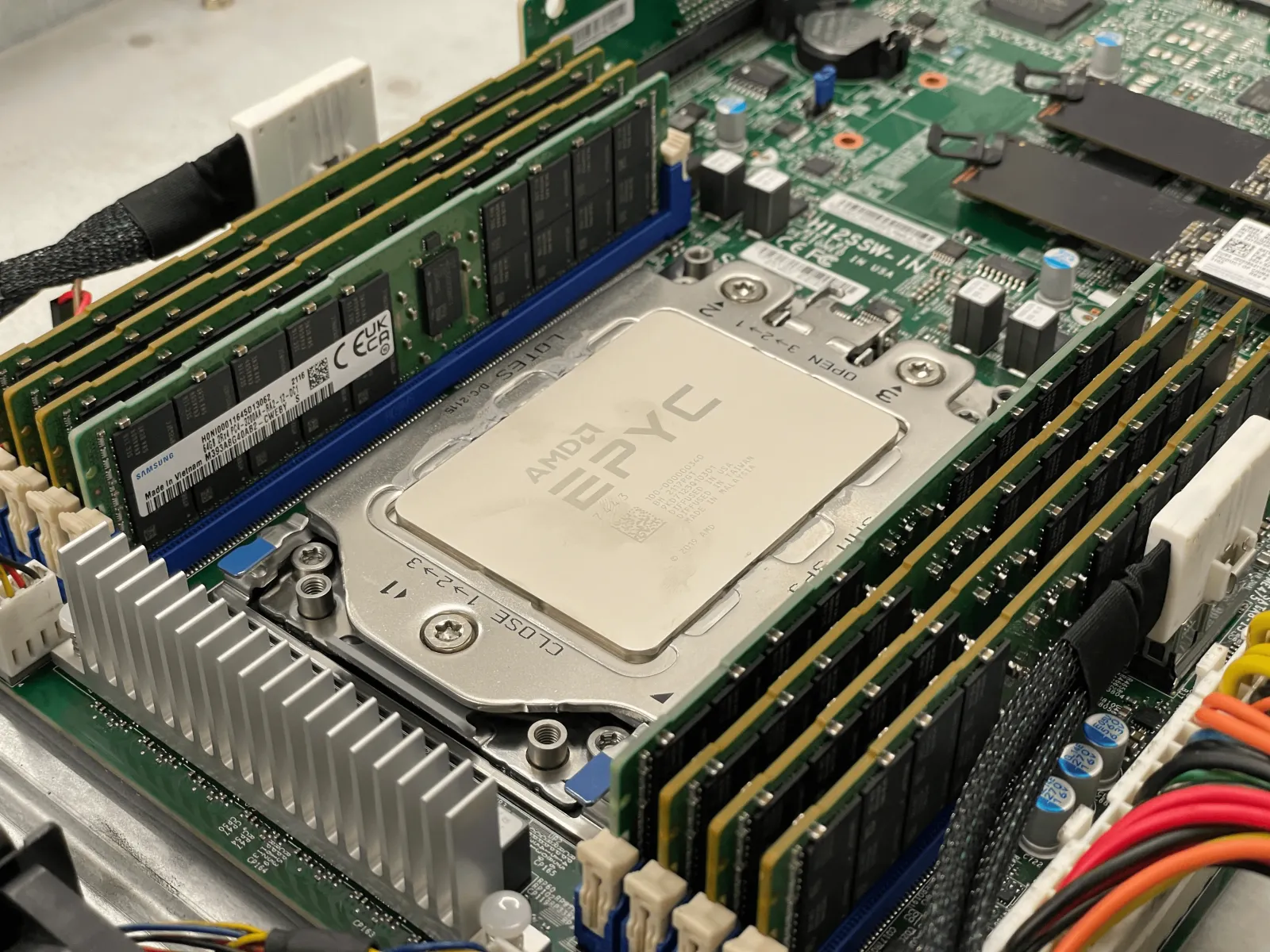
AMD EPYC 7443 · Maincubes FRA01
Technical Specifications
Host System Specifications
Real cluster values — no marketing numbers.
CPU
AMD EPYC 7443
24 cores / 48 threads, Milan generation
RAM
Samsung ECC-Reg. DDR4
3200 MHz, Registered ECC
NVMe
Samsung Datacenter NVMe
PCIe 4.0, low latency
NIC
2 × 25 Gbit/s
Arista switch, bonded redundant
Virtualisation
KVM / Proxmox VE
Hardware virtualisation, dedicated kernel
Storage
Ceph — 3-way replication
Distributed storage, no single point of failure
Software-defined Storage
CEPH Distributed Storage
Storage does not live on a single machine. It is spread across our entire cluster. Ceph replicates every block of data three times across separate hosts (3-way replication). If a storage node fails, another one takes over automatically, without downtime and without data loss. Horizontal scalability lets us grow capacity without standstill; new hardware is integrated during operation.

Network
Redundant 25 Gbit/s Infrastructure
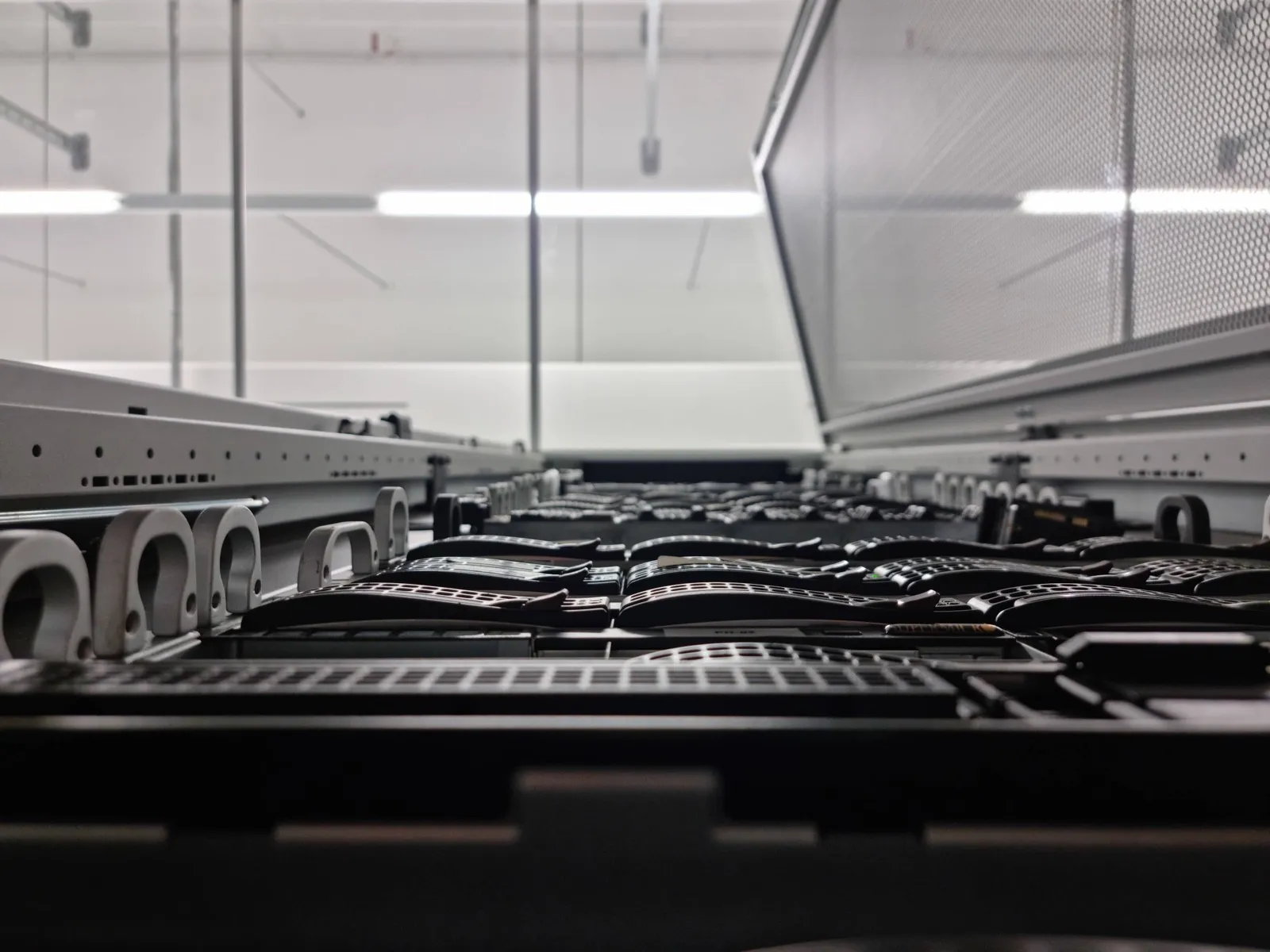
Every host has two physical uplinks. If one port fails, the second takes over seamlessly.
- Host uplink
- 2 × 25 Gbit/s
- Switch vendor
- Arista Networks
- DDoS protection
- Arbor Networks — always active
- Network transit
- DE-CIX Frankfurt
Software Stack
Proven Enterprise Software
Every component is production-hardened and deployed across the full cluster.
Proxmox VE
KVM virtualisation platform with live migration and HA clustering.
Ceph Storage
Software-defined storage — 3-way replication across all storage nodes.

Arista Networks
High-performance switching with 25 Gbit/s uplinks per host.

AMD EPYC
Milan generation — high core density, AVX-512, secure enclaves.

FAQ
Infrastructure Questions
What is the difference between a vServer and a root server?
Why Ceph instead of local storage?
What does KVM virtualisation mean technically?
How are the hosts connected to the network?
Where are your servers physically located?
More questions? Contact us!
If you have any questions, we are happy to help via email.
- No contract · Prepaid · Online in minutes